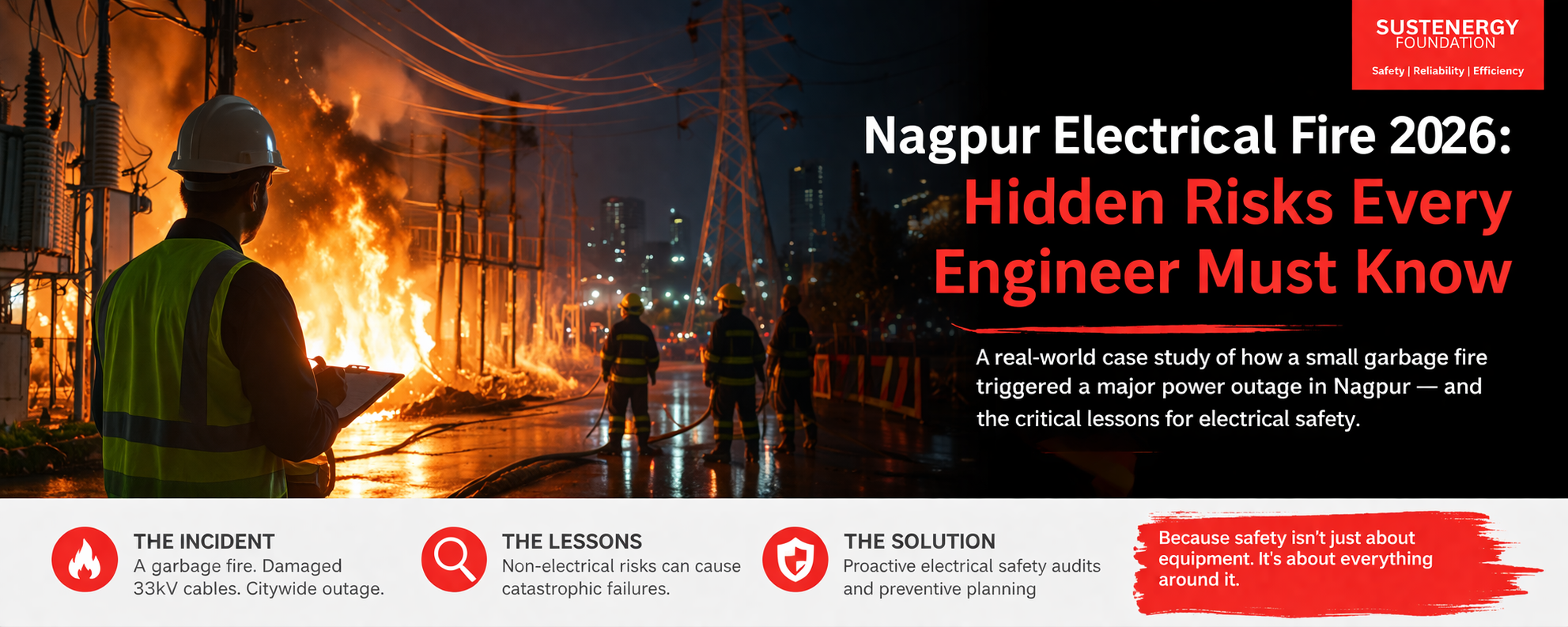
Nagpur Electrical Fire (April 2026): A Wake-Up Call for Modern Electrical Safety
The recent electrical fire in Nagpur on April 6–7, 2026, is more than just another incident—it highlights how vulnerable electrical infrastructure can be to everyday risks.
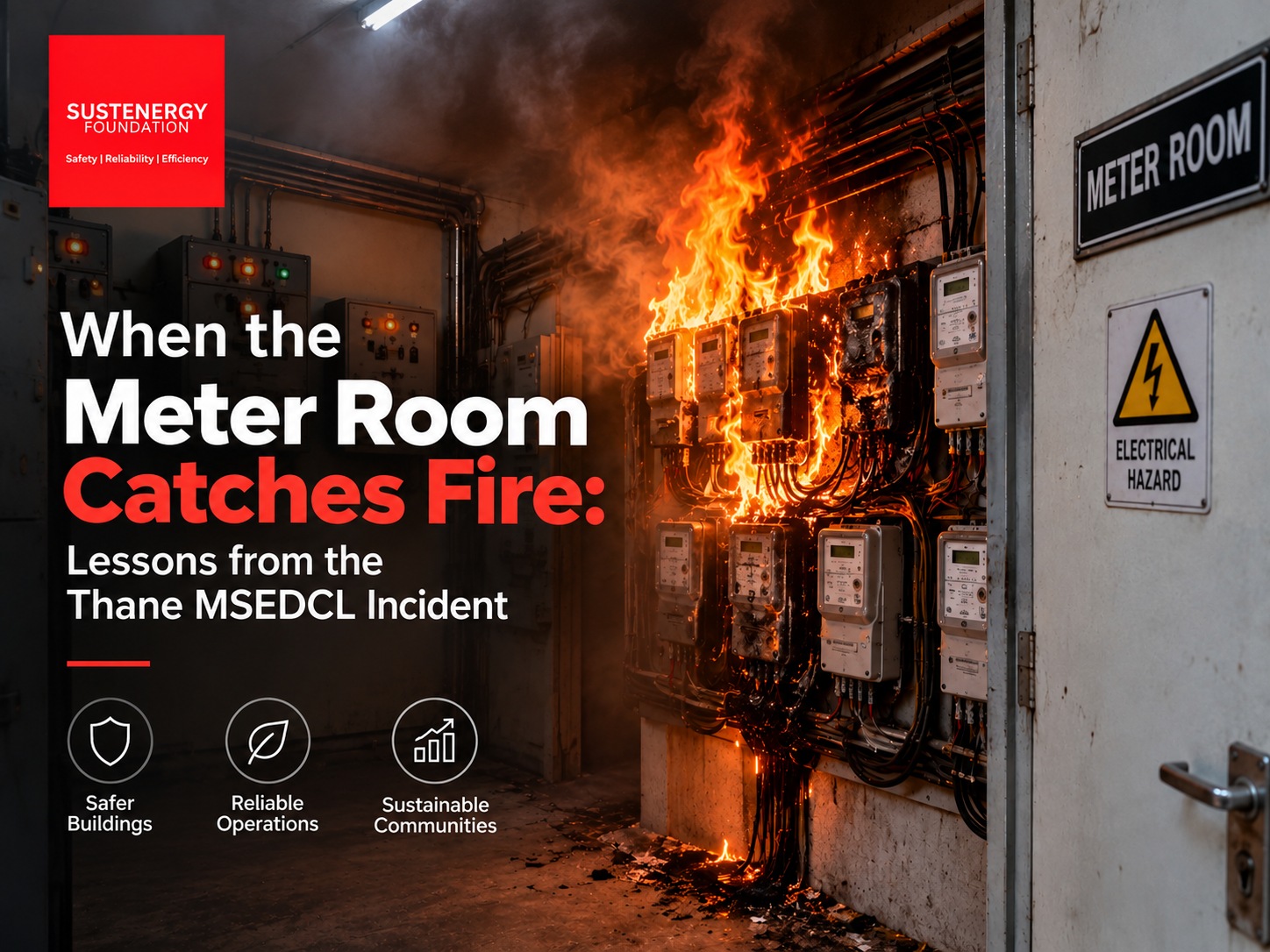
What began as a small garbage fire near the Wathoda substation quickly escalated into a major crisis. Flames spread to nearby 33 kV cables, causing widespread power outages and severe infrastructure damage.
This was not just an electrical failure. It was a failure of awareness, planning, and preventive safety.
What Really Caused the Fire?
The root cause was not a technical fault in the electrical system.
It was a garbage fire near critical infrastructure. Poor waste management created a high-risk environment. Once the fire spread, cable insulation failed, leading to cascading electrical failures.
Key contributing factors:
- Poor waste management near substations
- Lack of protective barriers around electrical infrastructure
- Absence of early fire detection systems
- Urban planning gaps placing substations near dumping zones
This incident clearly shows that non-electrical risks can directly impact electrical systems.
Impact: More Than Just a Power Cut
The consequences of the Nagpur incident were significant:
Power Disruptions
Homes and businesses experienced prolonged outages, disrupting daily life and operations.
Infrastructure Damage
Critical 33 kV cables were severely damaged, requiring costly repairs and replacements.
Public Safety Risks
Fires near electrical systems increased the risk of electrocution, explosions, and further fire spread.
Economic Loss
Businesses faced downtime, while utilities incurred repair costs and reputational damage.
Environmental Impact
Burning waste released toxic fumes, worsening air quality and contributing to environmental harm.
Key Lessons for Electrical Engineers
This incident reinforces the need for a broader approach to electrical safety.
1. Look Beyond Electrical Faults
Electrical engineers must consider risks such as garbage fires, water seepage, rodent activity, and nearby construction. These factors can be just as dangerous as electrical faults.
2. Surroundings Are Critical
The safety of substations and cable routes depends heavily on their environment.
Engineers should ensure:
- No combustible materials are stored nearby
- Vegetation is regularly cleared
- Proper drainage systems are maintained
- Unauthorized dumping is prevented
In many cases, periodic electrical safety audits can help identify such external risks early, before they evolve into serious incidents.
3. Focus on Preventive Systems
Early detection and preventive infrastructure can stop small hazards from escalating.
Examples include:
- Thermal monitoring systems
- Smoke detection systems
- Fire-resistant barriers
Organizations that regularly engage with the best electrical safety audit firm in India often find that these preventive measures are implemented more effectively and consistently.
4. Strengthen Cross-Functional Collaboration
Electrical safety requires coordination with municipal authorities, waste management teams, and facility managers.
This is where insights from a top electrical safety audit firm in India can also help bridge gaps between technical teams and operational stakeholders.
5. Improve Training and Awareness
Staff and contractors must be trained to identify and report non-electrical hazards such as waste accumulation and unsafe surroundings.
The Bigger Picture: A Growing Urban Risk
This incident is not isolated. Across India, electrical infrastructure is often exposed to environmental risks due to rapid urban expansion.
- Substations are located near residential and commercial areas
- Waste management practices are often inadequate
- External hazards are increasing
As cities grow, structured approaches like regular electrical safety audits are becoming essential rather than optional.
What Needs to Change?
For Utilities:
- Invest in fire-resistant cables
- Install protective barriers around infrastructure
- Implement advanced monitoring systems
For Policymakers:
- Enforce buffer zones around substations
- Introduce strict penalties for waste dumping near critical infrastructure
For Engineers:
- Adopt a multidisciplinary approach to risk management
- Address both technical and environmental risks
Why This Matters
Electrical engineers play a critical role in ensuring safety and reliability.
- Preventable failures can disrupt public life
- Infrastructure damage affects economic stability
- Safety risks can lead to serious consequences
- Sustainable systems depend on resilient infrastructure
Conclusion
The Nagpur electrical fire of April 2026 serves as a strong reminder that electrical safety extends beyond wires and equipment.
External factors such as waste management, environmental conditions, and urban planning play a crucial role in infrastructure reliability.
To prevent similar incidents, engineers must adopt a broader perspective—one that integrates technical expertise with environmental awareness, preventive planning, and structured practices like regular electrical safety audits.