Electrical Safety Audit vs Electrical Inspection: What's the Real Difference?
Every factory, office tower, hospital and home runs on electricity. We rarely think about it until something goes wrong. Neglected electrical systems can cause fires, shocks, damaged equipment and costly downtime.
To keep those risks in check, organisations rely on two things: electrical inspections and electrical safety audits. People often use the terms as if they mean the same thing. They don't. Each has a different purpose and goes to a different depth. Knowing which is which helps you build a safety system that works.
1. What Is an Electrical Inspection?
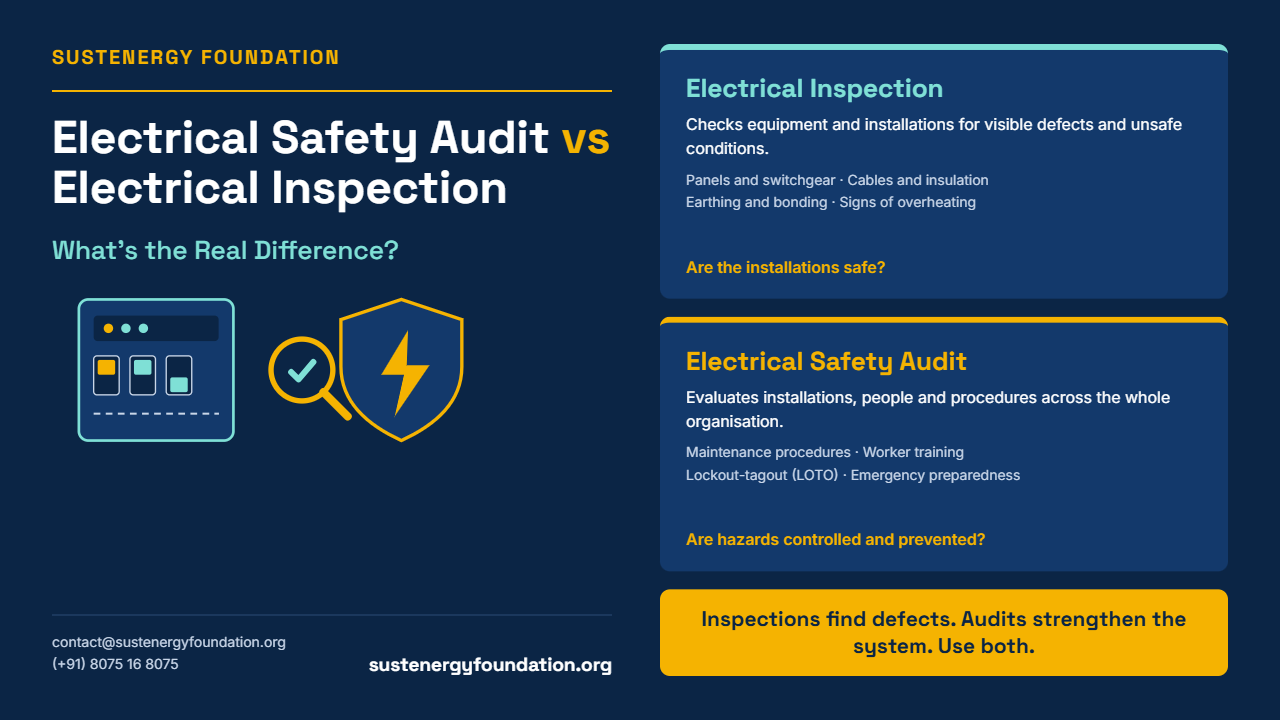
An electrical inspection is a systematic check of your installations, equipment and components. It confirms they're in good physical condition, working properly and meeting the applicable standards.
The goal is simple: spot visible defects and unsafe conditions before they turn into incidents. A typical inspection looks at:
- Electrical panels, distribution boards and switchgear
- Circuit breakers, fuses and other protective devices
- Cables, wiring and insulation
- Earthing and bonding arrangements
- Sockets, switches and connections
- Lighting systems and emergency electrical installations
- Signs of overheating, corrosion or physical damage
Say an inspector opens a distribution panel and finds loose connections, frayed cable insulation, weak earthing or a wrongly rated circuit breaker. That's exactly what an inspection is built to catch. The report lists what was found and what to fix.
Some defects hide from the naked eye, such as hotspots building inside a panel. That's why many facilities add thermal imaging inspection to their routine checks. Infrared cameras reveal abnormal heat long before it causes a failure.
In short, an inspection answers one question: are the electrical installations and equipment in a safe and satisfactory condition?
2. What Is an Electrical Safety Audit?
An electrical safety audit takes a much wider view. It evaluates your organisation's electrical safety arrangements, systems, procedures and risk controls, not just the hardware.
An inspection asks whether the equipment is fine. An audit also asks how your organisation finds, controls and manages electrical risk day to day. A thorough audit may include:
- Detailed assessment of electrical installations
- Evaluation of earthing and lightning protection systems
- Assessment of electrical fire and shock hazards
- Verification of protective devices and their coordination
- Review of maintenance procedures
- Examination of safety policies and documentation
- Verification of electrical workers' competency and training
- Review of lockout-tagout (LOTO) procedures
- Assessment of emergency preparedness and accident response
- Evaluation of compliance with statutory requirements and safety standards
Picture an industrial plant with beautifully installed panels. An audit might still find there's no proper preventive maintenance programme, isolation procedures are patchy and staff haven't had enough training. A routine inspection would likely miss all of that, yet these gaps are often where accidents begin.
That's also why electrical safety training matters so much. Well-trained people follow procedures, spot hazards early and respond properly when something goes wrong.
In short, an audit answers a bigger question: does your organisation have an effective system to identify, prevent and control electrical hazards?
3. Key Differences at a Glance
| Parameter | Electrical Inspection | Electrical Safety Audit |
|---|---|---|
| Primary objective | Identify electrical defects | Evaluate overall electrical safety |
| Scope | Equipment and installations | Installations, people and procedures |
| Approach | Mostly condition-based | Risk-based and system-oriented |
| Documentation | Inspection findings | Comprehensive audit report |
| Safety procedures | Limited review | Detailed evaluation |
| Employee competency | Generally not assessed | May be evaluated |
| Risk assessment | Focuses on observed defects | Examines broader electrical risks |
| Outcome | Defect identification | Safety improvement action plan |
The two aren't rivals. They work best together, and a good audit usually includes detailed inspections as one of its building blocks.
4. Which One Does Your Organisation Need?
It depends on the size, nature and risk profile of your electrical installation.
An electrical inspection makes the most sense when you're:
- Commissioning a new installation. A pre-commissioning electrical inspection checks wiring, continuity, grounding and protective devices before anything is energised
- Running periodic equipment condition checks
- Investigating electrical defects
- Verifying that corrective maintenance was done properly
- Examining installations after modifications
An electrical safety audit is especially important for:
- Manufacturing industries and industrial plants
- Hospitals and healthcare facilities
- Commercial buildings and shopping complexes
- Data centres and critical infrastructure
- Facilities with high electrical loads
- Organisations that want to strengthen statutory compliance and manage electrical risk better
Whatever you choose, set your inspection and audit schedules around the applicable regulations, how critical your equipment is, and your own risk assessments.
One more thing worth noting. A safe system is often a more efficient one, because loose connections, overloaded circuits and failing equipment waste power. A periodic energy audit alongside your safety work can uncover savings, cut energy costs and shrink your environmental footprint.
5. Electrical Safety Standards in India
In India, electrical installations and safety management should account for the following:
- Central Electricity Authority (Measures relating to Safety and Electric Supply) Regulations, 2023
- National Electrical Code of India (SP 30)
- Relevant Indian Standards (IS)
- Applicable provisions of the Electricity Act, 2003
- Relevant occupational health and safety requirements
Specific statutory inspection and testing requirements vary with the installation category and the regulations that apply. An internal electrical safety audit does not automatically replace any inspection, testing or certification the law requires.